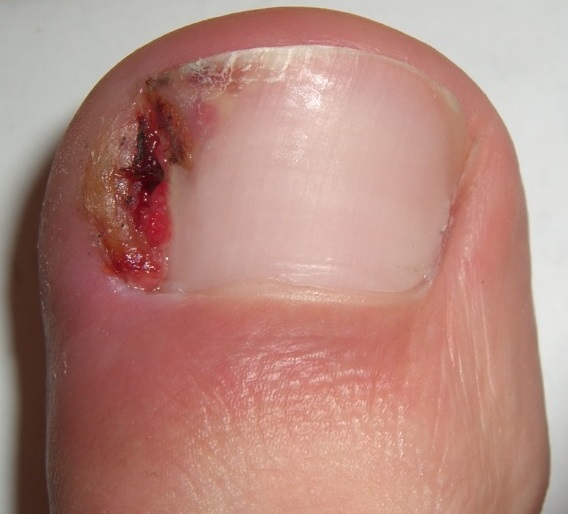
Ingrown / Involuted toenails

The problem of ingrown nails can affect anyone of any age. Ingrown nails are caused by the nail plate digging into the surrounding tissues of the nail shaft, leading to chronic inflammation accompanied by purulent exudate and granulation. Occasionally, the nail changes its shape and begins to roll unilaterally or bilaterally. This form usually progresses without inflammation.
Extrinsic causes of ingrown nails:
- incorrect shortening of the nail
- nail trauma
- too tight shoes
- intensive sports
- total or partial resection of the nail
- Intrinsic causes of ingrown nails:
- systemic diseases (diabetes, atherosclerosis, Psoriasis)
- Thyroid diseases
- Genetic factors
- Sensitive, fleshy nail shafts
- Overgrowth of the nail plate
- Too long toe
- Age of puberty
- Overweight
- Transverse flat feet
- Hallux valgus
Usually therapy begins with the removal of irritating elements and the withdrawal of inflammation.
In the case of ingrown toenails, the selected treatment depends on the degree of ingrowth of the nail plate and is designed to make the treatment as short and comfortable as possible for the patient.
Whatever the cause, treatment should start at the stage of pain and redness of the skin around the nail, without waiting for swelling and worsening of the inflammation, which usually leads, to purulent exudates.
When carried out correctly, the procedure to correct an ingrown nail generally avoids surgical intervention, which significantly increases the risk of a second ingrown nail.
During the visit, the patient is informed about prevention, proper care and recommendations that will accelerate the healing and recovery process. In addition, the predisposing factor should be diagnosed and its severity eliminated or corrected so as not to lead to recurrence.
Involuted nail on one or both sides. A twisting nail occurs when the lateral edges of the nail plate twist, compressing the nail bed, leading to a reduction in nail surface area. Screwing nails usually resemble a tube in their shape. This is very painful, but also unsightly. It affects adults, with a thickened plate. It usually occurs symmetrically and can affect 2, 3 as well as all toenails. Tubular nails usually do not break the continuity of the skin and the pain is caused by compression of the nail bed. The causes are the same as with ingrown nails plus bone and joint disease, dryness of the nail plate, excessive keratosis of the nail plate, and tissue ageing.